(x^2)/(x)Algebra · Simplifying
Simplify Calculator in the form you need
Simplify any expression — like terms, indices, surds or fractions — and pick the form your teacher wants. We'll flag any values x can't take.
- Free steps
- Graph
- Checked answers
Try it
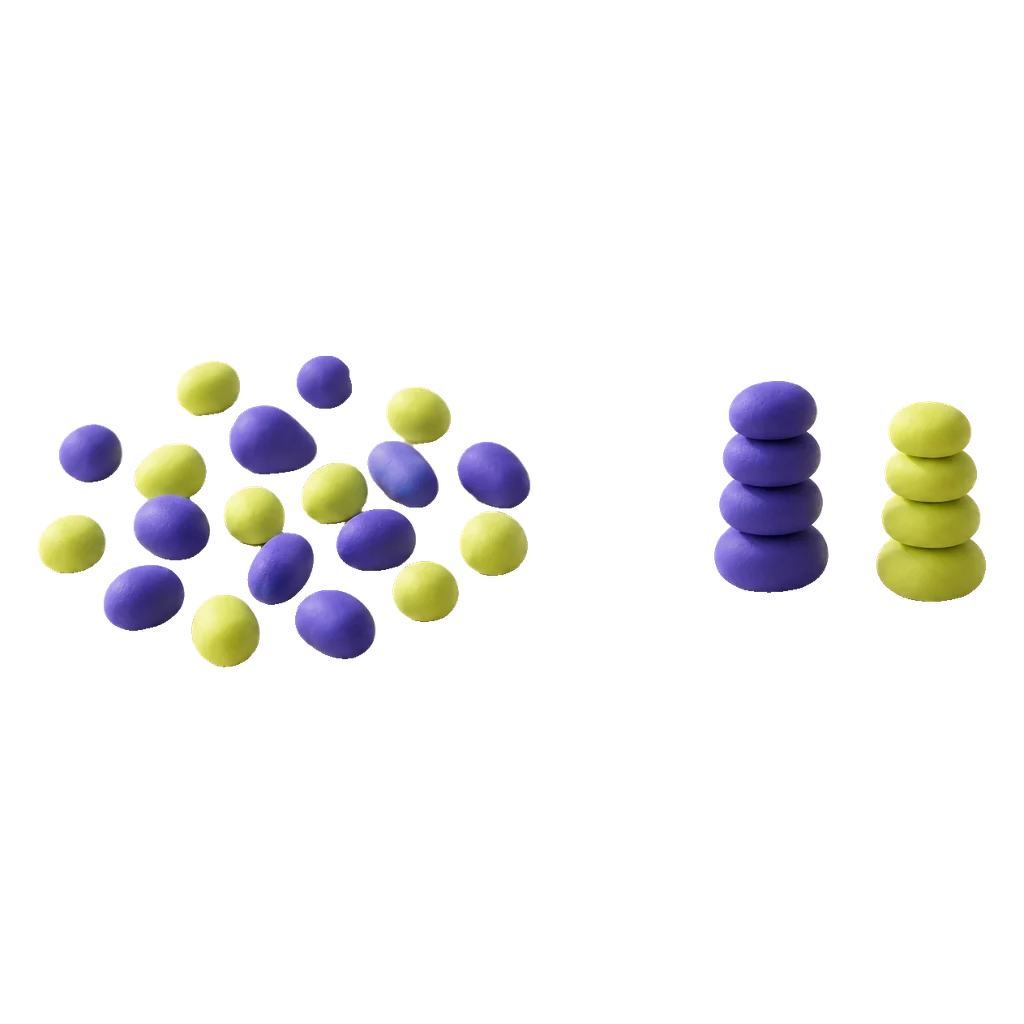
Like terms find each other. Then they merge.
Only terms with exactly the same letters and powers can be added. Scrub across the stage to collect them.
Expression
3x + 2y - x + 5 + 4y - 2Simplified
2x + 6y + 3Terms in the order they were written.
Drag across the stage or use the slider. Keyboard: focus the stage, ← → to scrub (Shift for bigger steps), Enter to play.
Why this simplify calculator is different
01
BODMAS made visible
Arithmetic is worked one class of operation at a time — Brackets, Orders, Division/Multiplication left to right, Addition/Subtraction — with exact fractions, mixed numbers, factorials and fractional powers such as 8^(2/3) shown in full.
02
Domain warnings included
Whenever the original divides by a letter or takes a square root, the answer says where it is valid: x/x = 1 for x ≠ 0, √(8x^3) = 2x√(2x) for x ≥ 0 — the step that most often costs marks.
03
Every bracket, every product
Expanding shows each product before like terms are collected — 2 × 3x + 2 × (-4), FOIL, or two brackets at a time for three. Surds are simplified and denominators rationalised with the conjugate.
What does a simplify calculator do?
A simplify calculator rewrites an expression in an equivalent form that is shorter or easier to use — without changing its value — and shows each rule it uses. 3(x + 2) - 2(x - 4) and x + 14 are equal for every x, but the second is much simpler.
What "simplest" means depends on the expression: a single number or fraction for arithmetic, the smallest number under each square root for surds, one power per letter for the laws of indices, no brackets and no repeated like terms for polynomials, and no common factors top and bottom for algebraic fractions.
Simplifying appears everywhere in school maths — order of operations (BODMAS in the UK and India, PEMDAS in the US), surds in CBSE Class 9 and GCSE Higher, indices, and algebraic fractions in GCSE, IGCSE, Algebra 1 and A-level.
How to use the simplify calculator
- 1Type an expression: arithmetic such as `2 + 3 * (4 - 1)^2` or `2 1/3 + 1 1/2`, surds such as `sqrt(72)`, or algebra such as `(x + 3)(x - 5)` or `(x^2 - 4)/(x - 2)`.
- 2Choose a Goal — Simplify, Expand or Evaluate — or simply start with "expand" or "simplify".
- 3Read the result on the answer card. Fractions also show a mixed number; polynomials also show the factorised form.
- 4Open the steps to see each rule named — BODMAS, like surds, rationalising, index laws, FOIL, collecting like terms, cancelling factors — with a short reason.
- 5Note the Valid for or Excluded values: they still apply to the simplified answer.
Rules the simplify calculator uses
The simplify calculator recognises the type of expression and applies these rules:
Order of operations (BODMAS / PEMDAS)
Brackets first, then orders (powers, roots, factorials), then division and multiplication from left to right, then addition and subtraction from left to right.
Fractions and mixed numbers
Mixed numbers become improper fractions; add with a common denominator and divide by multiplying by the reciprocal.
Surds and rationalising the denominator
Take the largest square factor out of the root, add only like surds, and clear surds from the bottom with the conjugate.
Laws of indices
Also (a^m)/(a^n) = a^(m-n) and a^(-n) = (1)/(a^n), so 16^(-1/2) = 1/4.
Expanding brackets and collecting like terms
Multiply every term in one bracket by every term in the other, then add like terms — same letters, same powers.
Algebraic fractions
Factorise the top and bottom, cancel common factors (never terms), and state the excluded values from the original denominator.
Simplify calculator worked example: (x² + 5x + 6)/(x² − 9)
- 01
Note the excluded values: the denominator x^2 - 9 is zero when x = 3 or x = -3.
x ≠ -3, x ≠ 3 - 02
Factorise the numerator with the AC method: 2 × 3 = 6 and 2 + 3 = 5.
x^2 + 5x + 6 = (x + 2)(x + 3) - 03
Factorise the denominator as a difference of two squares.
x^2 - 9 = (x - 3)(x + 3) - 04
Cancel the common factor (x + 3) — allowed because x ≠ -3.
frac (x + 2) cancel (x + 3)(x - 3) cancel (x + 3) = (x + 2)/(x - 3)
Common simplifying mistakes
Doing multiplication before division
Division and multiplication have equal priority: 8 ÷ 2 × 4 = 4 × 4 = 16, working left to right — not 8 ÷ 8 = 1.
Squaring a bracket term by term
(x + 3)^2 ≠ x^2 + 9. The correct expansion is x^2 + 6x + 9 — do not forget the middle term 2ab.
Cancelling terms instead of factors
In (x + 3)/(x + 6) nothing cancels — the x is part of a sum, not a factor. Factorise first and cancel only whole brackets.
Adding unlike surds
√(2) + √(3) ≠ √(5). Only like surds combine: 2√(3) + 3√(3) = 5√(3).
Simplify calculator FAQ
Is this simplify calculator free?+
Yes. Simplifying, expanding and evaluating — with every step, the numerical check and practice problems — is free, with no sign-up. Each rule is named in the working, so you can see why a step is allowed, not just what the final answer is, and compare it with your own method.
What is BODMAS (or PEMDAS)?+
It is the order of operations: Brackets, Orders (powers and roots), Division and Multiplication from left to right, then Addition and Subtraction from left to right. PEMDAS is the US name — Parentheses, Exponents, Multiplication/Division, Addition/Subtraction. Both give the same answer, for example 2 + 3 × (4 - 1)^2 = 29.
How do I simplify surds and rationalise the denominator?+
Take out the largest square factor, so √(72) = √(36 × 2) = 6√(2), and add only like surds. To rationalise, multiply the top and bottom by the surd or by the conjugate: (2)/(√(5) - 1) × (√(5) + 1)/(√(5) + 1) = (√(5) + 1)/(2), because the bottom becomes 5 - 1 = 4. Exam questions usually want this exact form rather than a decimal.
How do I expand and simplify brackets?+
Multiply every term in one bracket by every term in the other, then collect like terms. For (2x + 1)(x^2 - 3x + 4) that is six products, 2x^3 - 6x^2 + 8x + x^2 - 3x + 4, which collect to 2x^3 - 5x^2 + 5x + 4. Choose Expand or type "expand" to see every product written out.
Why does the answer say x ≠ 0?+
Because the original expression divides by something containing x. For example x/x = 1 only when x ≠ 0 — at x = 0 the original is 0/0, which is undefined. A simplified answer is only equal to the original where the original exists, so those values are stated.
How do the laws of indices work with negative and fractional powers?+
A negative index means "one over": x^(-2) = (1)/(x^2). A fractional index is a root: a^(p/q) = (root q of (a))^p, so 8^(2/3) = 2^2 = 4. Multiplying powers of the same base adds the indices, so x^(1/2) × x^(3/2) = x^2, and any non-zero base to the power 0 is 1.
Can I type mixed numbers and factorials?+
Yes. Type a mixed number with a space, such as `2 1/3 + 1 1/2`: it is first written as an improper fraction (7/3) and the answer is given as 23/6 and as the mixed number 35/6. Factorials such as `5!` or `3! + 4!` are worked out in the "orders" stage of BODMAS.
Stuck on a different problem? Snap it.
Photo, typed or pasted — the maths solver reads it, solves it and checks the answer.